How does someone go about learning what to expect when they are looking for a new Oriental rug?? Why should they believe what they are being told by the person trying to sell them something?? It’s sort of like walking in to a car dealership looking for a new car and not knowing anything about cars. It’s a big purchase! How can you be sure you’re making the right decision? How do you know you’re not being taken? How do you know which car is the right car for you?
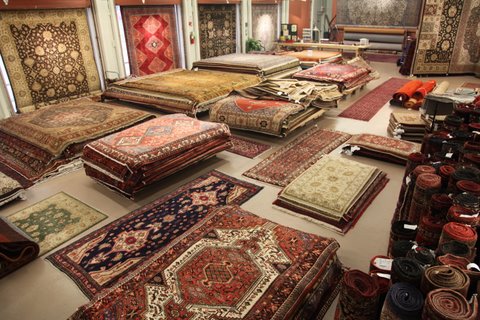 That’s where I come in! I am here to help demystify some rug terminology popular with rug dealers and give you some advance pointers that will help the process along.
Whether you are a rug cleaner trying to give your clients some advice, or you are a consumer looking for some useful information, I hope you will find the following helpful:
Age Terminology of Rugs
Age Terminology of Rugs
Antique - 100 years and older
This does not mean that you automatically will spend thousands upon thousands of dollars for this age group. Only some rugs appreciate in value. What is *does* mean is that you will need to ask if the rug has dry rot or prior repairs. Inspect for excessive wear, broken foundation threads and replacement fringes. Be wary of old rugs that look new.
Semi-Antique - 50 to 99 years old
This age group is still fairly easy to find, so don’t be afraid to comparison shop! Like buying a car, the more information you have up front, the better the deal will be. Know the average price range for a particular kind of rug ahead of time, and don’t be afraid to tell a rug dealer that you’ve seen it somewhere else for less. In this economy, you’ll find bargains you didn’t know existed!
Vintage - 20-49 years old
This age group is interesting. Post-embargo Persian rugs will probably be sub-standard, while rugs from other countries may be better than average for their own regions. You just have to get a feel for what you like and go with it. Inspect for run colors or rugs that look like they have been unraveled and overcast (shortened) at the ends.
New - 0 to 19 years old
Quicker, faster and cheaper is how rugs from this age group are manufactured. Always remember that you get what you pay for…unless you overpay. Ask how the rug is constructed or put together. Is it woven or tufted? Does it have a lining on the back? Knotted or woven rugs are going to last. Tufted rugs are held together with glue and will only last as long as the glue will. Not to mention the nasty odor sometimes associated with the off-gassing of tufted rugs.
Classification Terminology of Rugs
Tribal – Small rugs by nature and usually oddly shaped and coarsely woven. These rugs are typically woven by nomadic people and are true one-of-a-kind pieces. The color palette tends to be limited and the designs are geometric. (common: Beluch, Turkoman)
Village – These rugs are woven in utilitarian sizes. They are occasionally misshapen and are usually colorful and pleasant to look at. The quality of the weave will vary depending on the skill level of the at-home weaver. The patterns are more curvilinear than their tribal cousins, but are still quite geometric. (common: Hamadan, Herez)
City – These rugs are woven by skillful weavers, in factories, on permanent looms with a foreman in charge to oversee the speed and quality of the weaving being produced. They are typically intended for export and they come in various “American” sizes. They are fine in quality and fancy in design. (common: Tabriz, Kerman)
Palace – Huge in size, very complex in design, and very fine in quality. These rugs used to be woven by Royal commission and are a rarity. If a rug at a dealer is labeled “Palace”, most likely it is simply a reference to the fact that it is an oversized, fine carpet.
Country of Origin Terminology
Persian – Made in Iran
Turkish – Made in Turkey
Indian – Made in India
Chinese – Made in China
Pakistani – Made in Pakistan
Afghani – Made in Afghanistan
Caucasian – Made in the Caucasus Mountains between the Black Sea and the Caspian Sea
Indo-Persian – Made in India, but in a Persian motif
Sino-Persian – Made in China, but in a Persian motif
Paki-Persian – Made in Pakistan, but in a Persian motif
Oriental – from the East
Occidental – from the West
There are many other rug weaving countries: Peru, Egypt, Greece, Spain, France, Romania, Morocco, Mexico, the United States, etc. Their rugs may not be as commonly found in an everyday retail rug store.
Construction Terminology of Rugs
Tufted - Latex Back, Cloth Back, Glued Hems
Knotted - Warp & Weft Foundation, Pile
Woven - Flatweaves, Reversibles, No Pile
Bordered -Seams, Hot-Melt Seaming Tape, Specialty Binding
Category Terminology of RugsBroadlooms - Wall-To-Wall, Bound Remnants
Machine-Made - Axminster, Wilton, Velvet, Karastan, Spanish Contemporary
Hand-Made - Oriental, Flatweave, Needlepoint, Hooked, Braided, Reversible
Customs - Tufted, Seamed, Bordered, Specialty Materials, Designer Class
Aside from knowing the SIZE and COLOR of the rug you need, there will always be certain determining factors that you will have to keep in mind before buying. Do you have a dog? Do you have three dogs? Small children? Teenagers? A home by the beach? Depending on your lifestyle, you may want to forgo the $40,000 silk Tabriz in favor of a more durable, serviceable, cleanable, $3,000 Indian (Indo) Tabriz.
You get my point.
You get my point.
One last suggestion: Unless you know *specifically* what you are looking for and have some experience doing so, avoid on-line shopping for Oriental rugs. It is always better to be able to feel and inspect them in person.
HAPPY SHOPPING!!
As always, If you would like to contact me...You can reach me by email: Lynn@rugadvocate.com


